

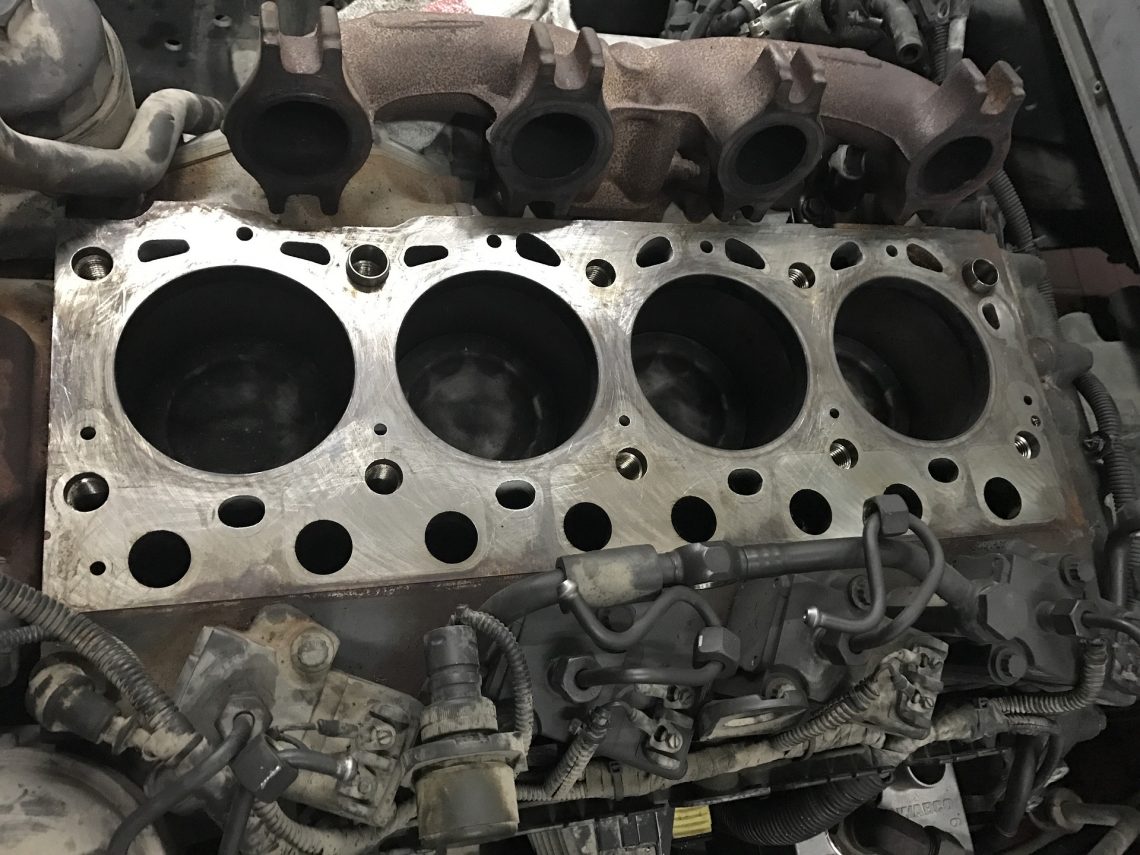
Having your truck engine repaired and regularly checked is an important part of your fleet maintenance, with this in mind, the single most important thing you can do for your business is to select the best truck repair and maintenance specialists.
The SECOND most important aspect is to choose the highest quality engines and transmissions and supporting parts for your fleet. Since these workhorse components provide the power and torque to make things move, they are typically the first to fail, and the most expensive to fix.
With that in mind, we wanted to cover the proper selection criteria for these components so that you can maximize the return of your fleet of commercial trucks.
How To Select The Right Engine And Transmission
With the number of engines and transmissions available today, you can certainly be able to pick the perfect combination depending on your needs. Here are a few tips on how to select the best ones for your company.
1. Use And Application
The use of the truck is one of the first things that you have to determine before you can choose the right engine and transmission. By knowing what the trucks are going to deal with, you’d know exactly the operating weight range and the kind of road surface it will drive through. With that, you can estimate the needed power to successfully get the job done without overworking the trucks.
Similarly, you’d also be able to equip the truck with various gears to further help the engine carry the load through various weather and road conditions. You’d also need to know how fast the trucks should be driven.
2. User Experience For The Driver
Truck drivers would have to spend hours on the road in a seated position and maneuvering a large vehicle. With this, you also need to consider the comfort of the driver. Take for example the vibration of the seat, how easy it is to maneuver the vehicle or how smooth it is to operate.
Trucks that are easy to drive and to control lessens the stress on the driver. Of course, you’d have to train your drivers to easily control the vehicles but sometimes trained drivers may be promoted and you’d need new drivers. If your trucks are already easy to control, the learning curve would considerably be less.
3. Engine Displacement
Engine displacement affects the power your engine can provide for the whole vehicle. Typically a bigger engine displacement volume can successfully move a huge load while not overworking your engine.
On the other hand, lower engine displacement volume may offer lesser power but they are better for fuel economy. They may not offer enough power for trailer trucks but they do well for smaller pickup trucks or fire trucks.
4. Manual Or Automatic Transmission
The choice to go for a manual or automatic transmission is affected by several factors like driver experience and the torque and power of the engine. Many fleet owners opt for automatic transmissions for their trucks because it lessens the stress and fatigue on the drivers. It also helps keep the driver’s eyes on the road at all times to prevent distractions.
5. Direct-Drive Vs Overdrive
Another factor to decide on is whether to go for direct drive or overdrive. Both are currently available in the market. There has been a preference for overdrive transmission because the direct drive had a few limits with regards to the axle ratio coverage.
Nevertheless, there are still a lot who prefer direct drive transmission because they are more fuel efficient. In response to the limits to the axle ratio, axle manufacturers have now started offering more ratio options to cope up with the demand and compatibility with direct drive transmissions.
6. Cost Of Ownership
Fleet managers certainly need to consider the total cost to determine if it fits in their budget. The total cost doesn’t only include the purchase price of the engines but also the cost of maintenance, repair, and fuel consumption.
Knowing the total cost helps in choosing which engine and transmission are capable of getting the job done without costing too much for the company and for the customers as well. In some cases, there is a trade-off between performance and efficiency.
As fleet managers, it is their responsibility to make decisions that increase efficiency while decreasing cost. It may sound impossible but fleet managers make the most of what they’re dealt with.
7. Resale Value
Lastly, the resale value should also be considered. Whether the company would like to resell them because they are upgrading or they’re just disposing of unused trucks, the resale value is very important.
The resale value is higher on products that are of higher demand. The way it’s been used also affects the value. Some suggest getting gas engines that are lower in up-front cost if you’re quick to replace and upgrade vehicles. Diesel engines, on the other hand, are better at fuel economy and are more durable.